


Fiberglass Septic Tank Pumping


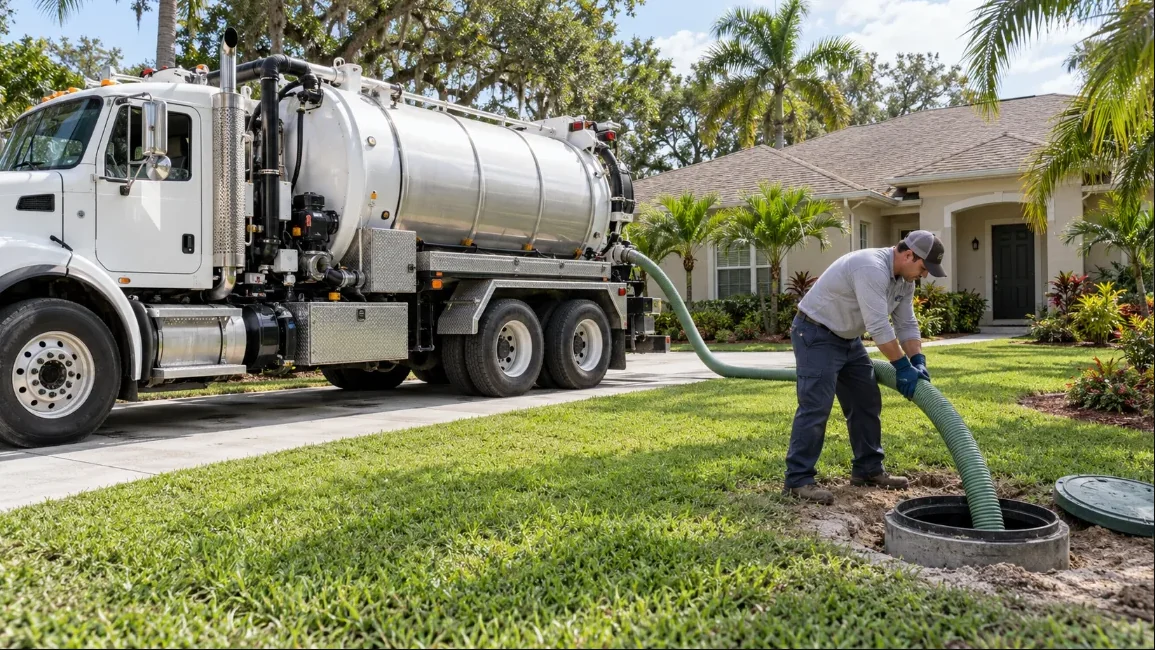
Full pumping was requested for a fiberglass septic tank of approximately 1,000 gallons. The tank was fully pumped out, and its sidewalls were rinsed to remove sludge and scum.
- Cost
- $475
- Timeline to completion
- 2–3 hours
Chattanooga Septic Solutions is the #1 septic in Chattanooga, TN. We provide septic tank pumping, cleaning, real estate inspections, repairs, installations, and replacements for residential and commercial properties. We also handle drain field inspections, repairs, and replacements.
We have over 16 years of experience in project management, repairs, and business development. We start with the cause. Then we choose the right service for your property. Hamilton County soil, slope, wet ground and sewer availability shape the plan. Expected service life depends on the installed product, site conditions and maintenance.
Full pumping was requested for a fiberglass septic tank of approximately 1,000 gallons. The tank was fully pumped out, and its sidewalls were rinsed to remove sludge and scum.


With the old septic tank beyond its expected lifespan, the customer needed a full replacement. It was replaced with a 1,000-gallon concrete septic tank.
Starting prices depend on tank size, access, site conditions and required approvals. Confirm the final scope and total in your quote.

No verified local installed-tank average was found. Use state minimum examples to understand the scale, then confirm your actual tank and approved design.
| Bedrooms | Minimum tank capacity |
|---|---|
| 2 or fewer | 750 gallons |
| 3 | 900 gallons |
| 4 | 1,000 gallons |
| 5 | 1,250 gallons |
For each bedroom beyond four, the table adds 250 gallons. Commercial facilities have separate flow-based sizing. Tank storage, treatment flow and drain field area are different parts of the design.
Tennessee SSDS rules. A larger tank cannot compensate for unsuitable receiving soil.
Hamilton County Groundwater Protection is the local permitting contact, at 423-209-7876. This is the county office, not our service number.
| Application | Posted fee |
|---|---|
| New system | $440 |
| Modification | $440 |
| Repair | $40 |
| Existing-system review | $205 |
These are county charges, separate from contractor pricing and possible design work. Confirm the current category and fees through the county portal.
Use a 4–6-business-day allowance only for initial planning after a complete application; it is not a published county promise or the total project duration. TDEC general guidance says review can take up to 45 days after a complete application. Hamilton County runs its own contract-county program, so confirm its current queue directly.
Missing plans, soil mapping, site access, design changes and inspection readiness add time. Qualified third-party packages use a distinct route and go directly to the county; they do not remove required approval or completion documentation.
Use the new permit category for conventional or alternative systems.
Repair addresses a failing system. Added bedrooms or field lines can require modification approval.
Confirm existing-system review or modification before building over usable soil or access.
Ask for the records before buying, adding rooms or moving the field. A private real estate inspection does not replace county construction approval.
Heavy and rigid. Plan lifting access; inspect covers, walls and seams.
Lighter shell. Support, backfill and sound connections matter.
Lightweight molded plastic. Follow model-specific burial and groundwater requirements.
A conventional system relies on suitable soil after tank treatment. Other sites need different distribution or advanced treatment. Shell material does not determine treatment type. Compare maintenance obligations and equipment costs alongside installation price.
Assess soil depth, restrictive layers, wetness and slope at the actual site. On steeper properties, equipment access and the usable field area need early planning. Keep buildings, paving and heavy traffic off the replacement area.
NWS Chattanooga climate normals report about 55 inches of rain a year. Wet receiving soil can restrict field drainage. A rain-related backup needs the tank, outlet and field considered together; another pump-out does not dry the ground.
The City of Chattanooga handles its sewer location and tap questions. WWTA serves unincorporated areas and specified municipalities; it excludes City of Chattanooga, Collegedale and Walden. Check the utility for your exact address.
The housing series spans Tennessee and Georgia. This guide covers Chattanooga/Hamilton County, Tennessee. A Georgia property needs its own local permitting review.
Practical answers for Chattanooga homes and businesses.
A measured local installed-tank average was not established. Tennessee minimum examples are 750 gallons through two bedrooms, 900 for three, and 1,000 for four. Check the installed tank record.
Hamilton County Groundwater Protection administers the local program. Applications are submitted through the county OpenGov portal.
Hamilton County lists bedroom additions and added field lines under modification. Pools and other additions may need an existing-system review or modification depending on the scope.
Confirm the current Hamilton County queue. A 4–6-business-day initial planning allowance is not a county promise. TDEC general guidance allows up to 45 days for a complete application; it is not a measured Hamilton County turnaround.
For a City of Chattanooga sewer location or tap, start with the city. WWTA serves other specified Hamilton County areas and municipalities, not City of Chattanooga sewers.
Many conventional households need pumping every three to five years. Measured solids, occupancy, tank size and water use determine the actual interval.
No. A real estate condition report and the required construction inspection or Certificate of Completion serve different purposes.
No. Availability, scope and scheduling are confirmed separately. The form is not emergency dispatch.
Tell us where you are, what is happening and the service you need.